
Partners · Resilient Design Coalition
Advancing building code provisions for resilient seismic design
Technical studies, prequalification reports, and code change proposals for functional recovery — for the 2026 NEHRP Provisions and the ASCE 7-28 Standard.
The Coalition develops the technical studies and code change proposals that expand resilient design provisions for functional recovery, in support of both the 2026 BSSC NEHRP Provisions and the ASCE 7-28 Standard. Full background is in the background section below.
Coalition webinars
Coalition reports
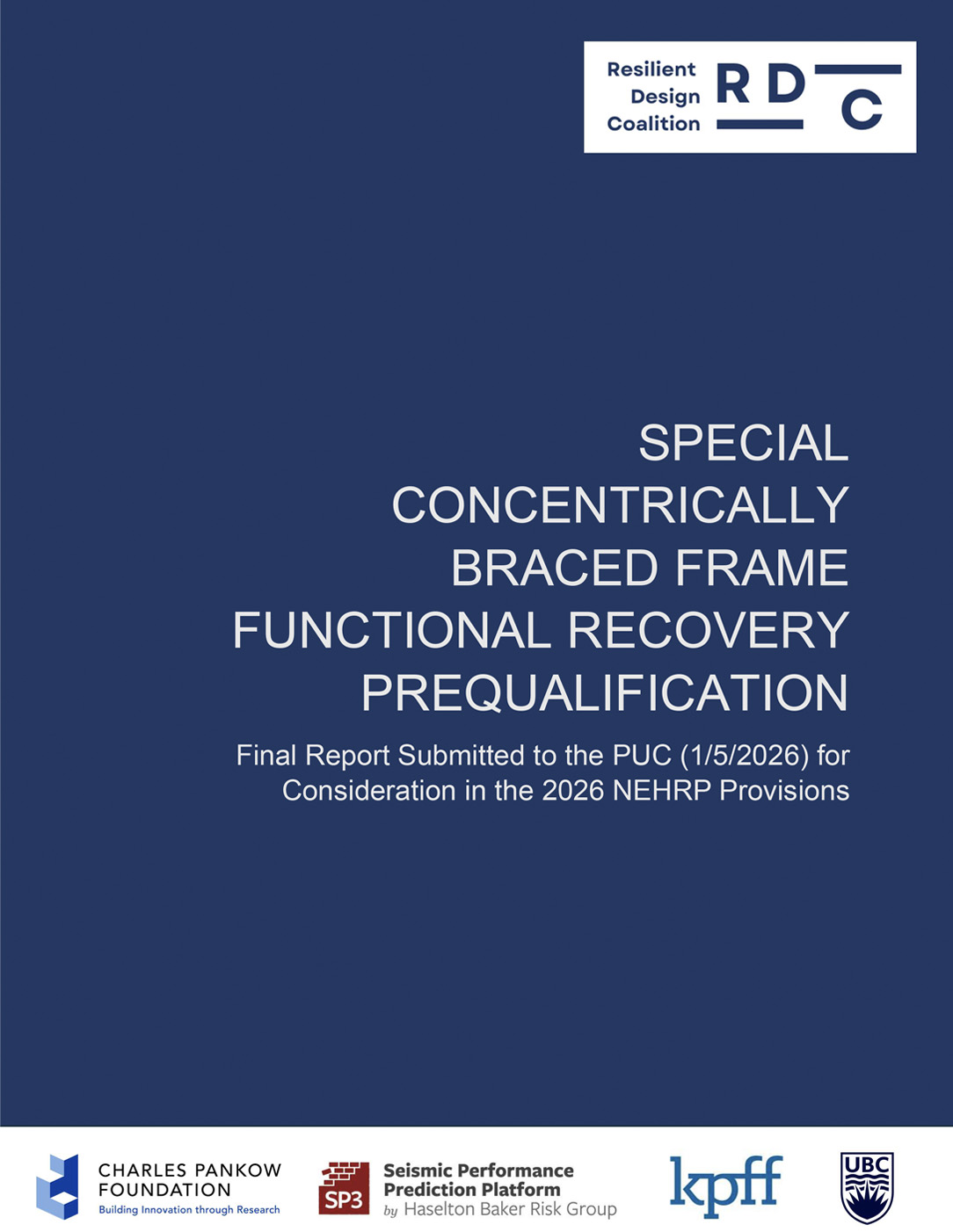
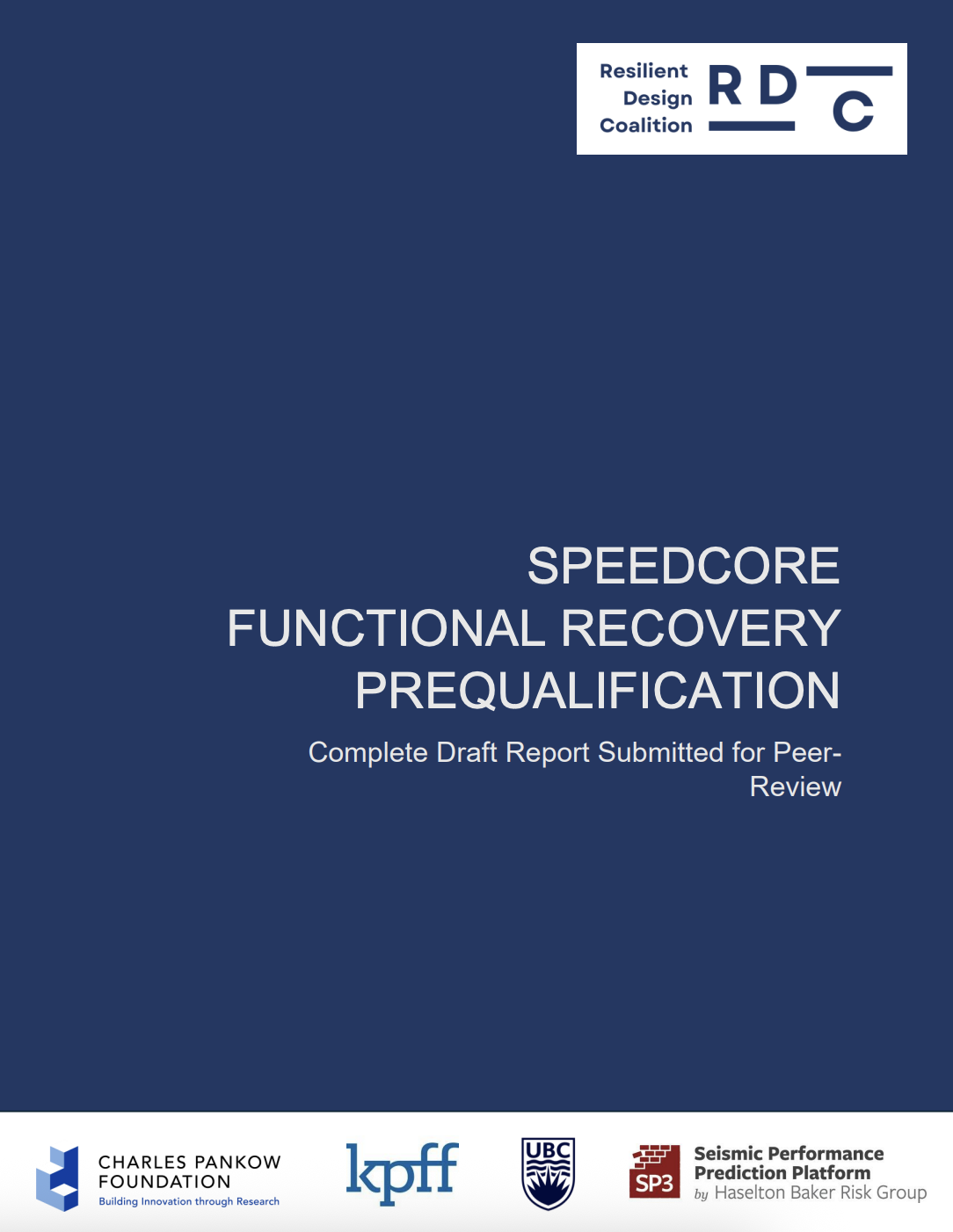
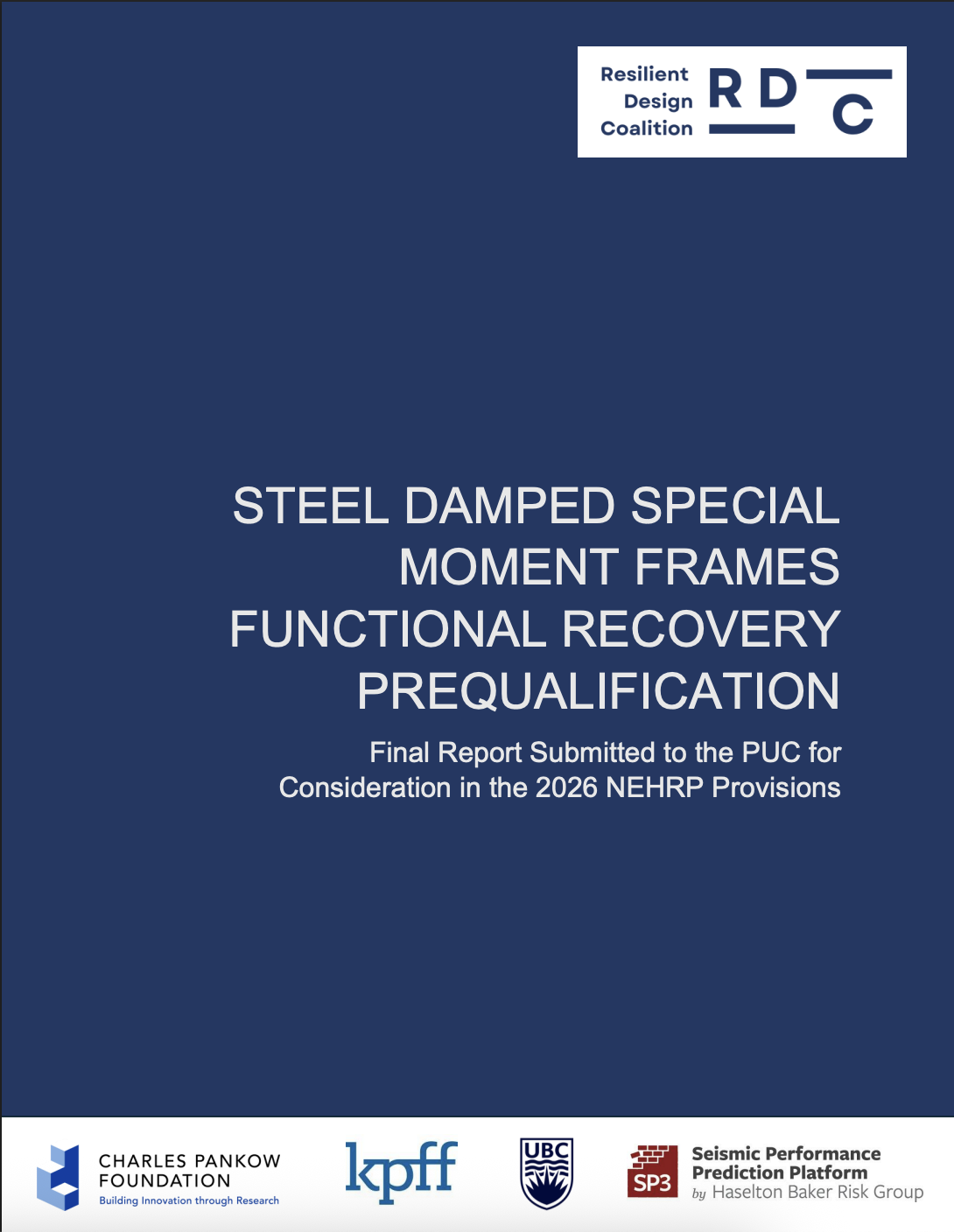
Functional recovery prequalification reports developed by the Coalition. Click any cover to open the full PDF.
Technical “Tiger Team”

Carlos Molina-Hutt, PhD
Associate Professor, University of British Columbia

Reid Zimmerman, SE
Technical Director, KPFF

Ed Almeter
Senior Research Engineer, Haselton Baker Risk Group

Kristen Blowes, PhD
Post-Doc, University of Colorado Boulder (PhD, University of British Columbia)

D. Jared DeBock, PhD, PE
Professor and Chair at CSU Chico and Haselton Baker Risk Group

Huy Pham, PhD
Post-Doc, University of British Columbia

David P. Welch, PhD
Senior Research Engineer, Haselton Baker Risk Group

Curt Haselton, PhD, PE
Professor at CSU Chico and Haselton Baker Risk Group
Independent peer review
Coalition supporters
Support for the Resilient Design Coalition is provided by partial matching funds from the Charles Pankow Foundation and by a broad cross-section of structural system supporters within our industry.
- Charles Pankow Foundation (co-funding for many structural systems)
- American Institute of Steel Construction (AISC) (SpeedCore and Steel SCBF)
- Clark Pacific (precast hybrid moment frame)
- Concrete Masonry and Hardscapes Association (masonry rigid-wall flexible-diaphragm, general masonry)
- CoreBrace (steel buckling-restrained braced frames)
- Taylor Devices Incorporated (Steel Damped Special Moment Frames)





Background
Technical background
The Building Seismic Safety Council (BSSC) drove this work through its 25-member Functional Recovery Task Committee (FRTC) and associated working groups, involving approximately 80–100 total participants. Through extensive collaborative effort, this team produced a complete voluntary appendix for the 2026 NEHRP Provisions — a full framework for resilient design for functional recovery, whose resilient design requirements initially covered a subset of structural systems.
A time-sensitive opportunity
While the BSSC Provisions Update Committee (PUC) balloted these initial provisions as a voluntary appendix, there was a one-year window to expand the scope of covered structural systems before publication — the Resilient Design Coalition was formed in specific response to that window, and used it. On June 24, 2026 the PUC approved the functional recovery provisions, with all 17 Coalition-evaluated structural systems included in the final Appendix A of the 2026 NEHRP Provisions. The provisions are now being balloted in the ASCE 7-28 process.
The role of the Coalition
To make the most of that opportunity, the Resilient Design Coalition carried out the technical studies needed to underpin further development of the resilient design provisions, and developed the code change proposals that supplemented and refined the functional recovery appendix balloted at the PUC.
The voluntary appendix was balloted and approved as proposed, completing the substantial work of the FRTC. The Coalition's work supplements it with proposals for further amendments and improvements through the remainder of this code cycle.
The BSSC PUC leadership has expressly supported the creation of this funded Resilient Design Coalition, with the direction that the Coalition operate separately from the FRTC, and has stated that they are open to reviewing and voting on proposals from the Coalition.
While the Resilient Design Coalition functions independently of the BSSC PUC FRTC and ASCE 7, all code change proposals it develops are vetted and balloted in the same manner as any other code change proposals.
The Coalition's technical work includes: (a) further development of a pre-qualification procedure for creating resilient design requirements for structural systems, (b) pre-qualifying additional structural systems, (c) running testbed cases to further vet the currently proposed provisions, (d) potentially refining the currently proposed provisions to remove conservatisms, (e) further vetting of underlying methods and comparisons to past earthquake observations, and (f) anything else needed to further the success of building code provisions for resilient design for functional recovery.
Funding and management
To date, the Coalition is being funded through a grant from the Charles Pankow Foundation, and by several organizations supporting the emergence of resilient design in the structural engineering industry (as listed above); we are also in discussion with several other funders who may join the Coalition in the near future. The Coalition is being managed by Haselton Baker Risk Group (as de facto convener). To take this work as far as possible in this code cycle, HB-Risk is providing management of this effort with no overhead.
Get involved with the Coalition
Interested in funding a structural system, contributing technical work, or following the code development effort? Reach out to the SP3 team.
Contact Us →