
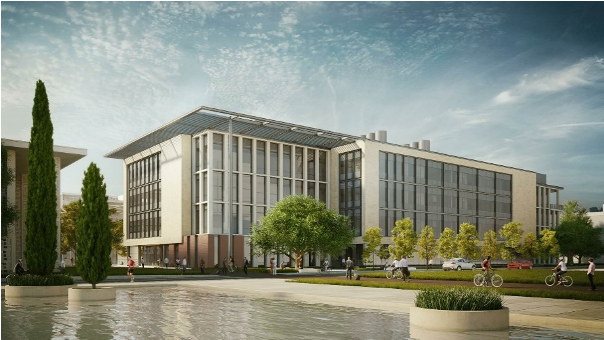
The Stanford Biomedical Innovations Building is a 5-story laboratory building utilizing buckling-restrained braced frames with a moment-connected back-up frame (which controls residual drifts), and the building has since been completed.
The engineers at Rutherford + Chekene were hired to design this facility and used SP3-Design (now SP3-RiskModel Advanced) to evaluate the building’s resilience when designed to meet Stanford’s Class II performance objective, with the goal of reducing downtime for research activities in the building.
Their design and detailed analysis included a specific focus on cladding and quality control.